
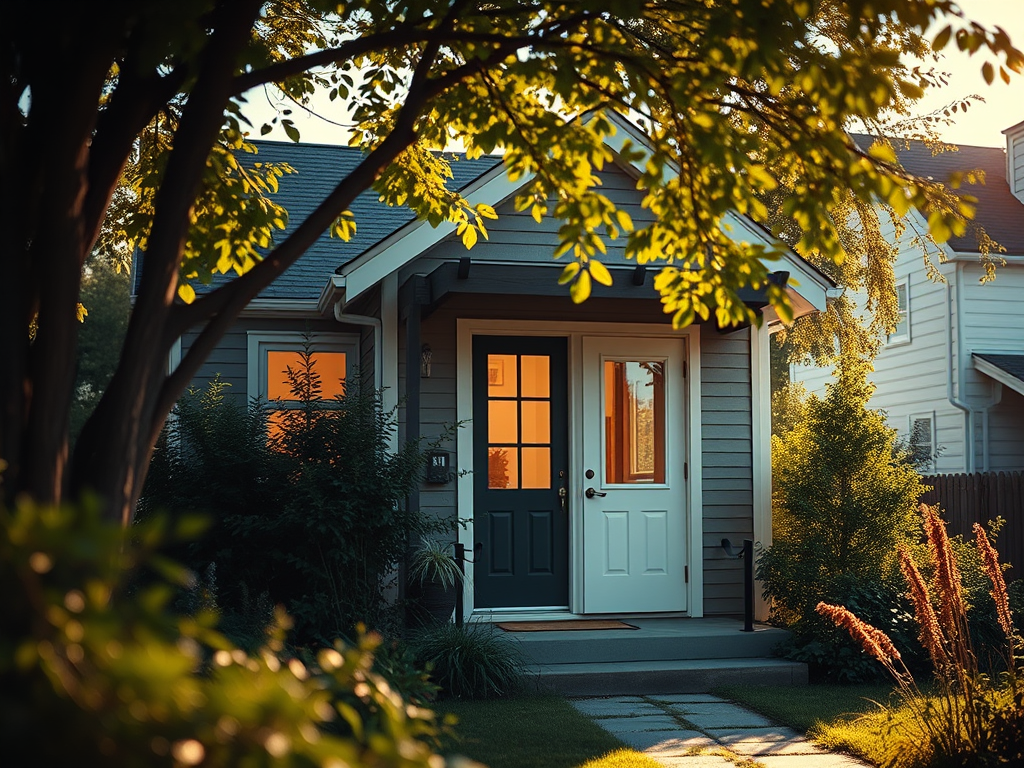
What is an Accessory Dwelling Unit (ADU) according to the law in Rhode Island?
Let’s break it down into a very simple legal definition and explain how it can dramatically change your cost of living over the next 10 years. And then we’ll explore the different things ADUs can do for you based on that definition.
DWELLING UNIT = PERMANENT HOME
A dwelling unit is a formal way to say home. It’s a place where a person can permanently live.
ACCESSORY = SECONDARY, EXTRA (NOT PRIMARY)
Accessory basically means secondary, extra, or auxiliary.
If you’ve got a lot with a house on it, that house is the primary dwelling unit.
When you go to build a second permanent home, that’s an accessory dwelling unit.
IT DOESN’T HAVE TO BE A HOUSE
Notice we keep saying “home” and not “house” – that’s because an ADU doesn’t have to be a literal house.
For example, if you’ve got a house with a space like a garage or a basement that you don’t use, you can convert that space into a home with its own entrance and amenities. And that’s an ADU.
BUT IT DOES HAVE TO BE PERMANENT
An ADU needs to be a place where a person can permanently live.
The state of Rhode Island defines this in its building code in a few important ways:
- ADUs must have a permanent foundation.
- ADUs need a way to cook, such as a stove hookup.
- ADUs need a way to clean up, like a sink hookup.
“Accessory dwelling unit” means an attached or a detached residential dwelling unit that provides complete independent living facilities for one or more persons and is located on a lot with a proposed or existing primary residence. It shall include permanent provisions for living, sleeping, eating, cooking, and sanitation on the same parcel as the single-family or multifamily dwelling is or will be situated.
The law explicitly says that they can be prefabricated and can be efficiency units.
But if you’ve got a tiny house on wheels without a city-approved stove hookup and plumbing… that’s not an ADU. It’s cool, but it’s not an accessory dwelling unit.
THEY CAN BE QUITE LARGE!
New detached Accessory Dwelling Units in Rhode Island can be up to 900 square feet. If you’re converting an existing structure, they can be as large as the existing structure.
Some early adopters of ADU construction had stricter size restrictions, leading many to believe ADUs have to be smaller. However, Rhode Island now allows for larger units under certain conditions.
HOMEOWNERS CAN MAKE MONEY WITH ADUS
If you own property in Rhode Island, you can now build an ADU and rent it out to generate income.
If you don’t know about ADUs, you might be missing out on a passive income stream. Almost all homeowners in the state now have the ability to build at least one ADU.
AND IT MATTERS TO EVERYBODY ELSE TOO
If you rent, ADUs are going to dramatically change your cost of living once they gain traction.
Cities with wide adoption of Accessory Dwelling Units have shown that ADU rentals are usually priced more affordably than similarly sized rental units in big apartment buildings or primary home rentals. The examples of Portland and Vancouver illustrate this well.
ADUs tend to be cheaper to build per square foot than big apartment buildings, which is likely why they’re more affordable per square foot.
The other benefit of ADUs is they will increase the supply of housing in Rhode Island.
For a long time, local agencies blocked new home developments in many areas. The new ADU laws are effectively ending single-family zoning restrictions. You can preserve that setup if you want, but you’re now zoned for multi-family if you prefer.
This increase in inventory will likely lower housing costs for everybody as supply goes up.
ACCESSORY DWELLING UNITS COULD HELP SOLVE THE HOUSING SHORTAGE
Encouraging the construction of ADUs can be part of the solution to the housing shortage. By empowering homeowners to build their wealth and their community, we can accelerate ADU construction.
If you want to be part of this movement, please subscribe in the box below and join us in this effort!
Leave a Reply